
Tips for Growing Successfully
While this method solves many problems, it’s still important to keep a few pivotal things in mind:
- Your container needs to be functional, adequate room for what you’re growing and most importantly good drainage
- Expect to water frequently, often a big adjustment from garden plots or raised beds, containers need careful attentiveness
- Animals, birds and pests can often find their way to even hard to access places, take care to protect your vegetables with proper measures prior to harvest
Vegetables that Prefer Containers
-
Tomatoes
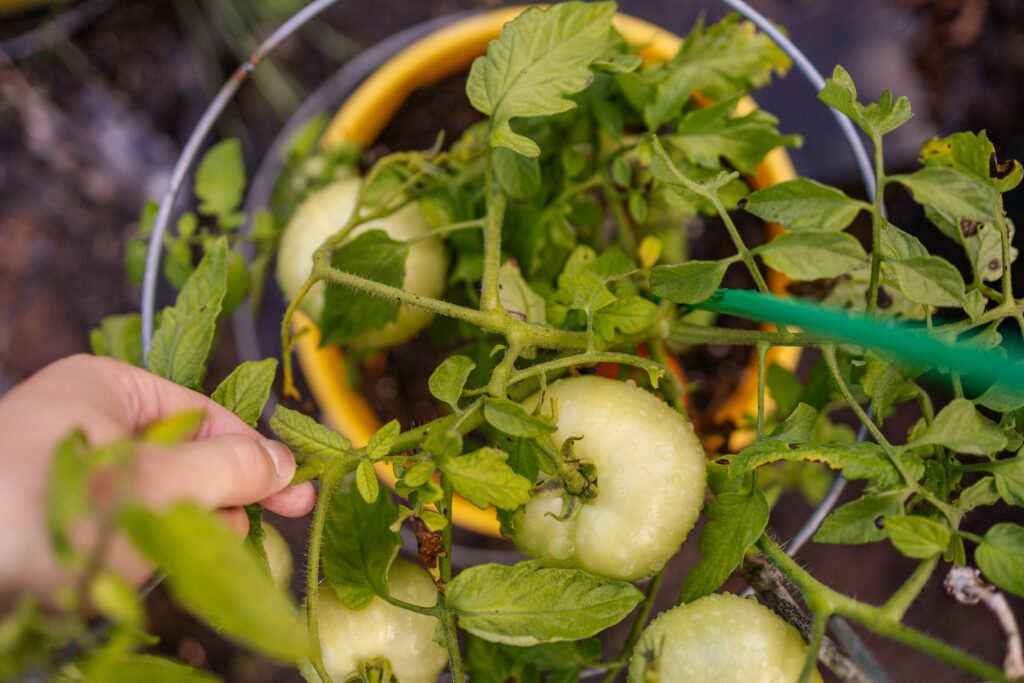
Most types of tomatoes do quite well in containers; given their popularity there is also a wide range of varieties suitable for this kind of growing. Often on nursery tags there will be a note that a particular cultivar will thrive in pots.
Notes on Care: Plenty (and we mean plenty) of water with well-drained soil and full-sun. Tomatoes also benefit from regular fertilizer feedings and as they grow in stature they need proper support and staking, even in containers. -
Peas
Opt for dwarf varieties. If you have the vertical space and ability to support climbing vines, however, growing standard varieties adds a beautiful visual appeal to any space. We personally love the Sugar Ann Snap Peas.
Notes on Care: Well drained soil and full sun. Watering when the top inch begins to dry, ensuring you water until it begins to drain through the bottom. -
Bell Peppers
The container size here can limit the size of your peppers so select accordingly, with a bigger the better mentality. Once your fruit is developing take care to keep them safe as many animals have been known to steal or taste and discard young bell peppers.
Notes on Care: Similar to tomatoes, provide good support as they grow and ample fertilizer feedings. They require full sun and loose-nutrient rich soil, with an average level of watering. -
Chili Peppers
Unlike their larger counterparts above, various kinds of chilli peppers thrive in containers. Including but not limited to jalapenos, cayenne, habanero, padron and thai hot. They are considered to be prolific producers with extremely high yields.
Notes on Care: The bigger the pot the less watering required. SImilar to bell peppers, smaller varieties will do better in larger containers. Their watering and soil needs are similar, however, some compact varieties don’t require as much support or staking. -
Lettuce
One of the easiest vegetables to tend to: lettuce. The only caveat is that it does best in the cooler temperatures of Spring/early Summer and in the Fall. Often the high temperatures of the Summer will cause it to bolt and become bitter. This can be avoided by selective placement and temperature regulation. Something not possible when growing in the ground.
Notes on Care: Lightweight and nutrient rich soil is essential for success. Look for varieties described as “compact” or with “compact-heads” as those will be happiest in containers. Partial to full sun. -
Radishes
If lettuce is one of, then radishes are the easiest vegetables to grow. From seeding to harvest, some varieties are ready in as littles are 20-odd days. Similar to lettuce though, they are considered cool-season crops thriving in Spring and Fall. Our personal favourite are french radishes that have an extra peppery bite and are elongated in shape.
Notes on Care: Full sun, well-draining soil and a deep watering when the top inch is dry. -
Carrots
This addition may surprise you, however carrots can be tricky in the ground, especially if soil conditions are not favorable. Hard soil and stones for example can impede carrot length and girth. Provided you have an adequately sized container you can grow full-sized carrots from seed.
Notes on Care: Sandy, loose and light soil is a non-negotiable along with good drainage from the container. Provide full-sun and you’ll have your own beautiful carrots in no time. -
Spinach
A compact grower, the root system of spinach tends to be shallow, lending itself perfectly to containers. Like lettuce and radishes, spinach has a tendency to bolt if temperatures get too high. Adjusting location through the seasons can help prevent the latter. To increase yield, keep in mind you can grow about 5 plants per 15cm of space; increase your pot size and you can grow a higher amount of plants.
Notes on Care: Partial to full sun with light and loamy soil, watering when dry. -
Potatoes
So long as you have room for a large pot (40-60 litres), potatoes are within reach. Say goodbye to perpetual digging through the ground to find tubers, there are even specialized containers that make harvests even easier. Temperatures tend to be warmer in containers which additionally expedite harvest and produce larger tubers.
Notes on Care: Full sun and well-drained soil. Ensure you include some compost in your initial soil composition and to only fill your container about 2/3 when planting as you’ll need to hill the plants when they’re about 6-8 inches tall. -
Cucumbers
Last but certainly not least, we have a fan-favourite. Considered to be heavy feeders, most cucumber varieties also climb and do require strong trellising to support fruit development. A larger pot will ensure root growth is not inhibited so opt for something on the substantial side.
Notes on Care: As they are heavy feeders, be sure to have a good feeding schedule. Full sun and rich, well-draining soil are integral to good growth. Keep soil consistently moist and be sure that your containers do not dry out.
We hope that all your containers are overflowing with beautiful vegetables this season. For more reading on all things home, garden and lifestyle, peruse the Wild Blog . And, if you don’t already, be sure to follow us on Instagram and Pinterest.