
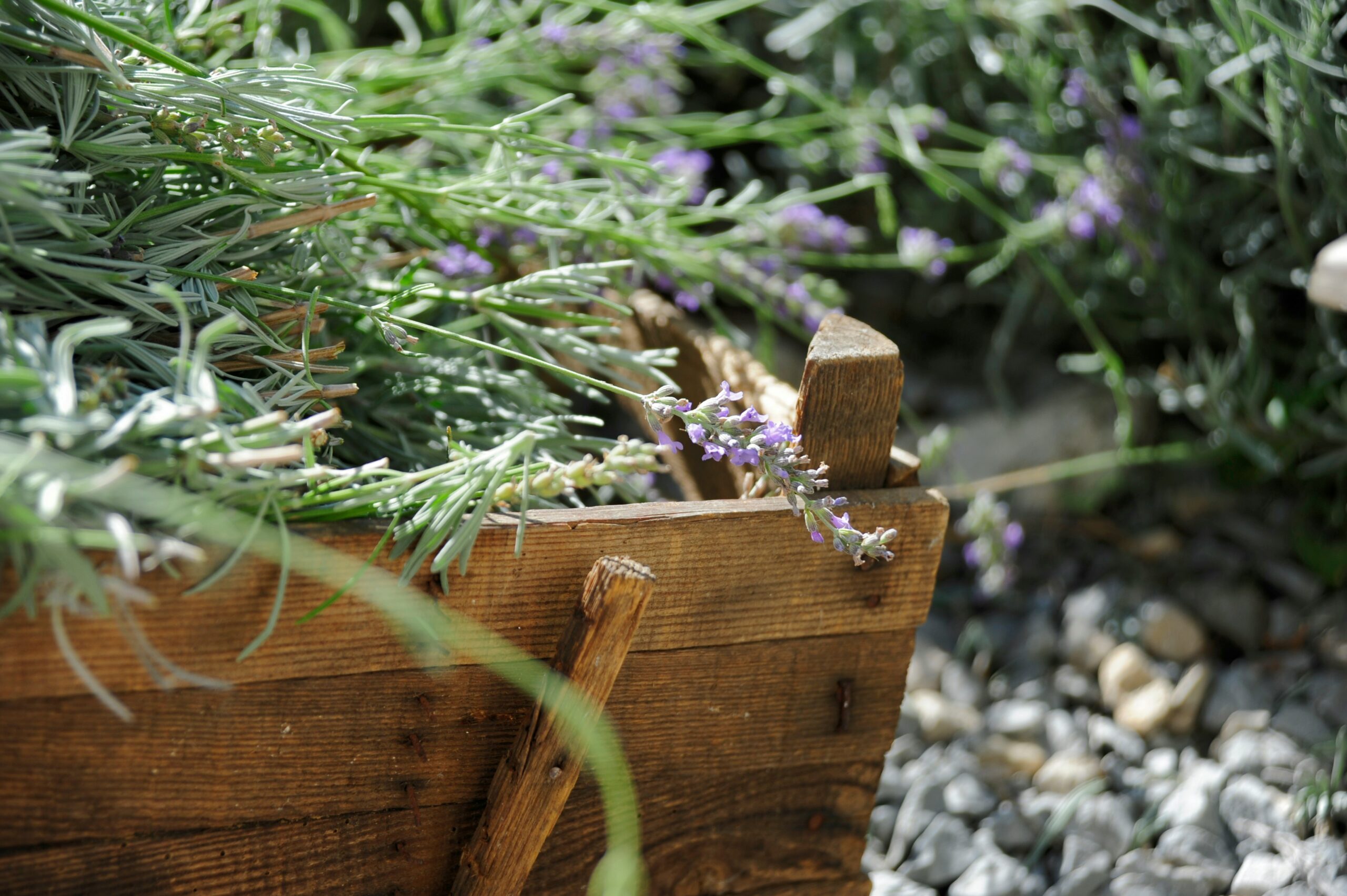
Growing Lavender as a (tender) Perennial
Technically speaking lavender is a tender perennial–some hardy varieties can handle freezing temperatures successfully while the delicate roots systems of others can be decimated during the winter months. It’s important when initially purchasing your plants to see if there are any notes about hardiness. Growing lavender in pots solves this issue if you are in an area where it’s unlikely to survive as these pots can be brought indoors to overwinter. But otherwise, with proper care your lavender can live anywhere from 10-20 years. This means what you do between seasons can be just as important as during season.
Harvesting Lavender
Regular harvesting has two benefits, the first is that you get to enjoy the relaxing aroma of the lavender flowers indoors. Secondly, regular cutting encourages bushy and mounded growth. Without consistent cutting you get woody, messy and leggy bushes. Ideally, you want to wait until about 2/3 of the flowers in a spike have opened, this equates to both the brightest colour and strongest scent. Make your cut leaving at least 1-3 inches of green stem remaining. Lavender can be enjoyed both fresh and dried.
Pre- and Post-Season Care
Leading up to your frost, harvest for the final time and complete a fall pruning (more on pruning in a moment). While you may be tempted to mulch or tightly wrap your plant, avoid both. Lavender does not need to be mulched as it can increase the moisture levels and wreak havoc on the root systems. In colder climates and especially for the more tender varieties like French or Spanish, you can introduce additional protection via burlap. Using an a-frame or even a tomato cage to allow a separation between the burlap and plant is the best method. This ensure breathability and protection from the wind.
Pruning
You can prune your lavender both in the Autumn and then again the following Spring. In the Fall, avoid pruning too close to the actual frost date. You’ll want to aim for about 4-6 weeks prior to the anticipated date for best results. Fresh cuts too close to that frost can cause something called dieback as they are exposed to those freezing temperatures. The cuts need time to heal. If you miss your pruning date, you can make up for it in the Spring, but ideally twice a year for optimal results. Leading up to winter, you’ll want to prune the same way you harvest, always leaving 1-3 inches of green stem in each cut. You can round your plant into a dome by cutting the outside edges down to about an inch and the inner portions therefore left longer to help maintain the shape.
In the Spring, wait until your plant is out of dormancy, evident by green shoots emerging. In this prune we aim for a gentle shaping rather than a true prune. Annual pruning will prolong the lavender’s lifespan, preventing woodiness and promoting the lovely bushiness the plant is beloved for.

May your lavender bushes grow large and fill your gardens and homes with the most wonderful of scents. For more things home and garden, read the Wild Blog. P.s., if you don’t already, be sure to follow us on Pinterest and Instagram.